



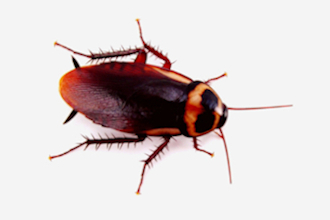
Cockroaches are insects which belong to Blattodea order (Blattodea, Blattaria). There are about 3,500 different types of cockroaches classified into 6 basic families around the world. In Europe, there are about 150 species while in Greece 20.
Most of them are soil-borne, activate at night and hide in soil’s cracks during daytime. They prefer moisture environments. They mainly structure simple social life forms and can only be found massively near food sources.
Blattodea are omnivore species and basically not predators. Some species can survive under unpleasant conditions such long periods of starvation. It has been recorded that Perplaneta Americana managed to survive for 42 days in a row without food and water. Blattodea species can survive with water and not food for several months.
There are four evolution stages. Most species deposit capsules with fertilized eggs which hatch afterwards. The larvae hatch from the membrane capsule is accomplished cooperatively. Embryos by swallowing air, increase their volume and thereby cause the pouch break. In evolution process we encounter three more levels. In basic cases, the egg capsules reside in the female body. In following cases, no capsule is formed, and the eggs are laid shortly before hatching. After hatching, the first larvae stages begin.
Pycnoscelis surenamensis genus follows a virulent type development, while in other species that happens occasionally.
Blattodea species belong to Hemimetabolous insects.
When they hatch from the egg, nymphs often already look like adults.
Some species live in houses and are potential disease carriers. They contaminate food and can spread pathogens. They can also cause allergic reactions.