



The routine surface testing strengthens the existing hygiene measures and sanitation protocols by providing an early indication of COVID-19 contamination and reassuring the safety of employees, customers, and visitors in various sectors and places. Though the surface testing is complementary to the existing preventive measures, it is a necessary action that has to be taken in order for a company or organization to be fully compliant with the COVID-19 safety measures and protocols and to minimize the infection risk.
https://www.cdc.gov/coronavirus/2019-ncov/prevent-getting-sick/how-covid-spreads.html
**Alex W H Chin,Julie T S Chu, Mahen R A Perera, Kenrie P Y Hui, Hui-Ling Yen, Michael C W Chan et al. Stability of SARS-CoV-2 in different environmental conditions, The Lancet, Published online April 02, 2020.0
Van Doremalen N, Bushmaker T, Morris DH, Holbrook MG, Gamble A, Williamson BN, et al. Aerosol and surface stability of SARS-CoV-2 as compared with SARS-CoV-1. N Engl J Med. 2020;382(16):1564–7.
Riddell, S., Goldie, S., Hill, A. et al. The effect of temperature on persistence of SARS-CoV-2 on common surfaces. Virol J 17, 145 (2020). https://doi.org/10.1186/s12985-020-01418-7
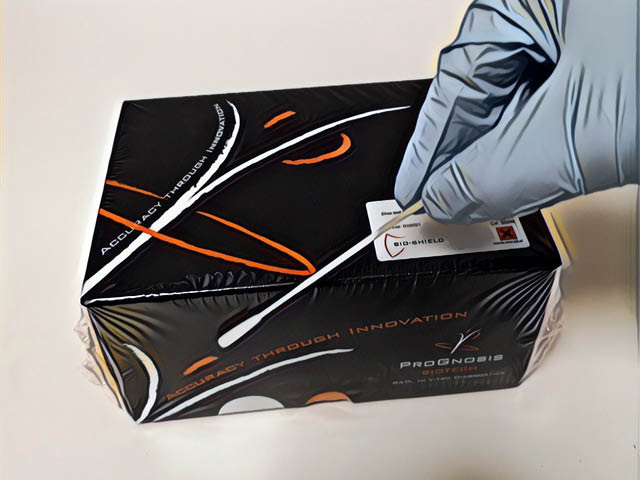
ELISA KIT CHARACTERISTICS:
■ Quantitative ELISA test with single-break strip plate of 48 wells (6 strips)
■ Test time: 105 min
■ LOD: 0.55ng/ml and LOQ: 1ng/ml.
■ Compatible with automated ELISA systems
■ Applications: Food industry, healthcare, hospitality, public places (airports, metro & train stations, malls)
■ Shelf Life: 12 months | Storage 2-8 °C